Beyond Wants: Designing for Human Flourishing
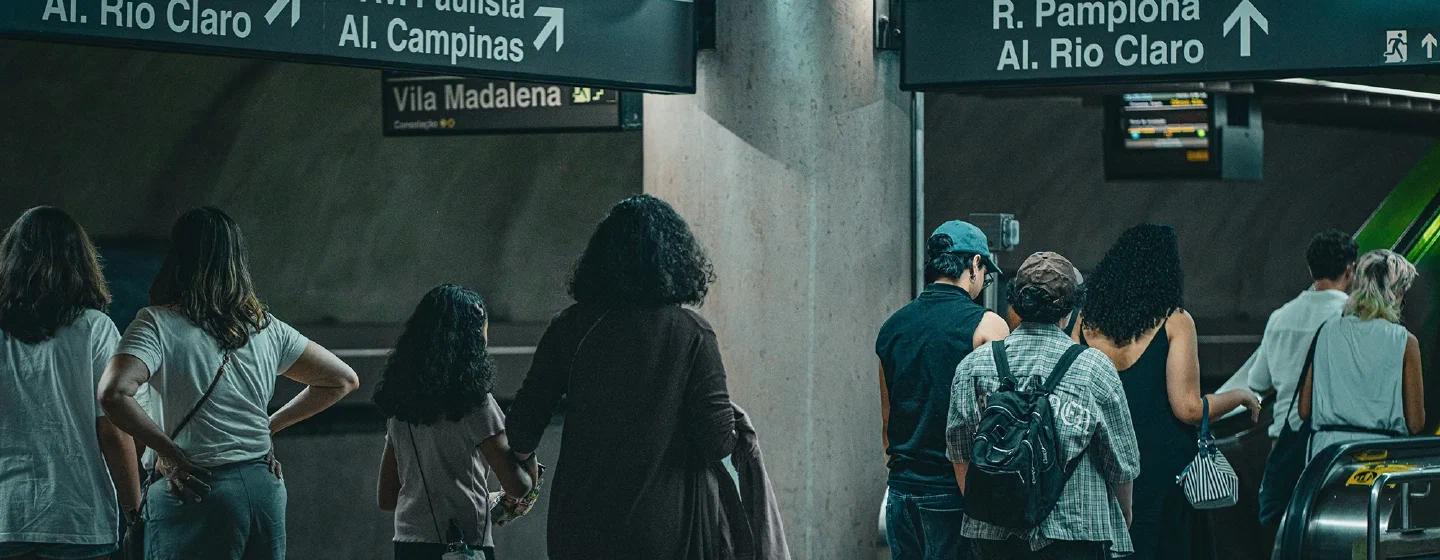
When Line 4 of the São Paulo Metro introduced its SIIM system, nobody had asked for it. Each of the eleven stations on the Yellow Line now has its own musical composition, developed in partnership with conductor Gil Jardim and personalized based on the character of each station’s surrounding neighborhood. When the doors open, the music plays. When the doors close, it stops. The tempo shifts throughout the day; more energetic in the morning rush, softer in the evening. Passengers intuitively learn the rhythm of boarding and alighting without announcements, without anxiety, without the cognitive load of watching a countdown timer. Nobody filled out a survey asking for station music. No focus group surfaced door-closing stress as a top complaint. The insight came from someone asking a different question entirely: not what do passengers want, but what would make this experience feel more human? That question changes everything.
From Wants to Flourishing
Most innovation processes are built around stated needs. We research what people say they want, map the gaps in what the market offers, and design solutions to fill them. It is a reasonable approach, and it produces reasonable solutions. But reasonable solutions doesn’t mean meaningful ones. There is a deeper layer beneath what people say they want: what they need to genuinely thrive. Not just functionally, but socially, emotionally, and in terms of meaning and purpose. When you design from that layer, you arrive at questions, and eventually solutions, that purely market-driven thinking would never reach. This is the insight at the heart of the Harvard Human Flourishing Program, led by Professor Tyler VanderWeele. Rather than defining wellbeing as satisfaction or preference fulfillment, the program identifies five central domains of human flourishing:
- Happiness and life satisfaction: a sense of overall wellbeing and contentment
- Physical and mental health: the capacity to engage fully with the world
- Meaning and purpose: a sense that one’s life has direction beyond immediate circumstances
- Character and virtue: the values and integrity that shape how a person lives
- Close social relationships: the quality and depth of connection with others What struck me when I first encountered this was how we could encompass this framework to identify innovation opportunities. When you map a specific population against these five domains, asking where they are currently underserved in each, you may get a fundamentally different picture than standard market research produces.
What Could Change By Applying This Lens
The flourishing framework doesn’t replace business thinking. It deepens it. In practice, I see it as a framing exercise that sits at the very beginning of a design thinking process, before opportunity briefs are written, before How Might We questions are formulated. Think of it as a context map, similar in structure to a SWOT or PESTEL analysis, but oriented toward human experience rather than market forces. The questions it generates are different in kind:
- In which domain of flourishing is this population most underserved, and why?
- What systemic conditions prevent this group from experiencing genuine wellbeing?
- What shared sense of purpose does this community lack access to?
- What social infrastructure would allow deeper connection to form?
- What environment supports or undermines this group’s ability to live by their values? These are harder questions than “what does the market want?” They require deeper research, more patience, and a willingness to sit with complexity before rushing to solutions. But they tend to surface opportunities that are both more meaningful and more durable because they are grounded in something more fundamental than preference or convenience.
Two Windows Into Real Work
Embedding Values in the Innovation Process
A few years ago I worked for Thales on a project for their global network of design centers. The mandate was to adapt existing design thinking tools or develop new ones that embedded ESG considerations into every stage of the innovation process. Not as a filter applied at the end, but as a genuine input from the beginning. The underlying challenge was one I recognize now as a flourishing question in disguise: how do you make values a real part of how opportunities are identified and developed, rather than a compliance checkbox applied after the fact? That project influenced my thinking about values-based innovation. The flourishing framework is, in many ways, a natural evolution of that thinking.
Designing a Bootcamp Around Human Flourishing
More recently, I have been working with Avad on a design thinking initiative oriented explicitly around the flourishing framework. The five domains are serving as the conceptual foundation for a business creation bootcamp; a structured process for identifying innovation opportunities not by asking what the market wants, but by asking what a specific community needs to genuinely thrive. What is compelling about this application is how naturally each domain maps onto real, specific, underserved needs within a well-defined community. The domain of close social relationships, for instance, points immediately toward the role of faith communities in sustaining meaningful connection, and from there, toward concrete opportunity spaces that purely market-driven research would have missed entirely. This work is still in development. I am not presenting a finished methodology. I am sharing emerging thinking, an exploration of what becomes possible when flourishing is the starting point rather than an afterthought.
The Invitation
The São Paulo Metro story is not about music. It is about what happens when designers ask a better question. The SIIM system did not emerge from a satisfaction survey. It emerged from someone observing passengers, noticing stress and friction and confusion, and asking what it would take for this experience to feel genuinely good, not just adequate. That shift, from adequate to genuinely good, from want to flourish, is available in every innovation process. It does not require a new methodology or a complete rethinking of how you work. It may just require a different starting point. What would change in your next project if flourishing was the first question you asked? I am currently developing a Flourishing Context Map as a practical design thinking tool. If this thinking resonates with a challenge you are working on, I would be glad to explore it further together.
Photo by Renata Moraes on Unsplash
About the author
Louis-Philippe Bellerose
Founder and Principal Consultant