The Nacirema Effect: What Living in Brazil Taught Me About Consulting
In 1956, anthropologist Horace Miner published a study of a North American tribe called the Nacirema. He described their daily rituals in clinical anthropological terms: shrines found in every home where people perform elaborate mouth rites, medicine men consulted for mysterious ailments, and painful ceremonies endured in the name of beauty. The paper was published in a serious academic journal and read as a genuine ethnographic study.
It takes a moment to realize: Nacirema is American spelled backwards. Miner was describing us. We just couldn’t recognize ourselves.
That paper has stayed with me for years. Because it captures something I experienced firsthand — not as a thought experiment, but as a lived reality.
Going to Brazil at 18
In 2007, at eighteen years old, I moved to Brazil. I lived in Atibaia, in the interior of São Paulo state, and it is where I learned Portuguese. Not in a classroom, but by living inside the language every day. Over the following years I traveled widely, to Cuiabá, to the dramatic landscape of Chapada dos Guimarães in Mato Grosso, to Porto Alegre in the south, and eventually to the Northeast, where I would later return many times.
Years later, back in Québec, I crossed paths briefly with a Brazilian woman visiting her sister in Sherbrooke. She returned to Brazil after her visit. We kept the relationship going across continents, and nine months later I married her in Recife. We speak Portuguese at home. Brazil has been part of my life ever since.
What Another Culture Does to You
Living inside another culture, really inside it, not as a tourist passing through, does something unexpected. It makes you see your own culture for the first time.
When you live somewhere else long enough, you stop explaining away the differences. You start noticing them. You sit with them. You ask why things work differently here. And then, inevitably, you go home and ask the same questions about things you never thought to question before.
Why do we do it this way? Is this actually the right way, or just the way we have always done it?
Growing up in Québec, I had assumptions so deeply embedded I could not see them. They were not assumptions, they were just reality. It took living inside Brazilian culture, with its different rhythms, different relationships to time and hierarchy and community, to make my own culture visible to me as a culture. Something constructed. Something chosen. Something that could have been otherwise.
That is the Nacirema effect. You cannot see what you are inside of. You need the outside to understand the inside.
What This Has to Do With Consulting
I have been thinking about this connection for years, and I have come to believe it is one of the most underrated things a consultant brings to an organization.
Every organization has a culture. Not in the abstract, motivational-poster sense, but in the deep, anthropological sense that Miner was describing. Assumptions so embedded that nobody questions them. Ways of making decisions that feel like common sense rather than choices. Ways of understanding users, or failing to, that have calcified into habit.
From the inside, these things are invisible. They are just how things work.
But I have never worked inside any of my clients’ organizations. I arrive from outside, move through their world for a period of time, conduct research, facilitate workshops, design solutions, and then I leave. And in that position, the same position I occupied as a young Québécois in the Brazilian cerrado, I can often see what they cannot.
Not because I am smarter. Because I am outside.
This is why good UX research is not just about asking users what they want. It is about observing what they actually do, noticing the gaps between intention and behaviour, and surfacing the assumptions that the organization has stopped questioning. It is, in a sense, anthropological work. You are studying a culture from the outside and reporting back to the people inside it.
And the most valuable thing you can tell them is often the thing that feels most obvious, once someone from outside finally says it out loud.
The Questions Worth Asking
The Nacirema paper works because Miner describes familiar things in unfamiliar language. Toothbrushing becomes a mouth rite. Doctors become medicine men. The defamiliarization makes us see ourselves.
Good consulting does something similar. It takes the familiar, your product, your service, your user experience, and describes it from the outside. Not to mock or criticize, but to make visible what has become invisible through familiarity.
Some of the most valuable questions I ask in a mandate are the ones that feel almost too simple:
Why does this step exist? Who decided it should work this way? When did you last ask your users if this still makes sense to them? What would you do differently if you were building this from scratch today?
These are not sophisticated questions. They are outside questions. The kind that only feel obvious once someone from outside finally asks them.
What This Means for Your Organization
You do not need to move to another country to get an outside perspective on your organization. But you do need to find a way to see yourself the way Miner saw the Nacirema, with fresh eyes, without the assumptions that come from being inside.
That is what a good consultant offers. Not just a methodology or a set of deliverables. A genuinely outside perspective, combined with the experience to know which questions are worth asking and the business fluency to translate the answers into something your organization can act on.
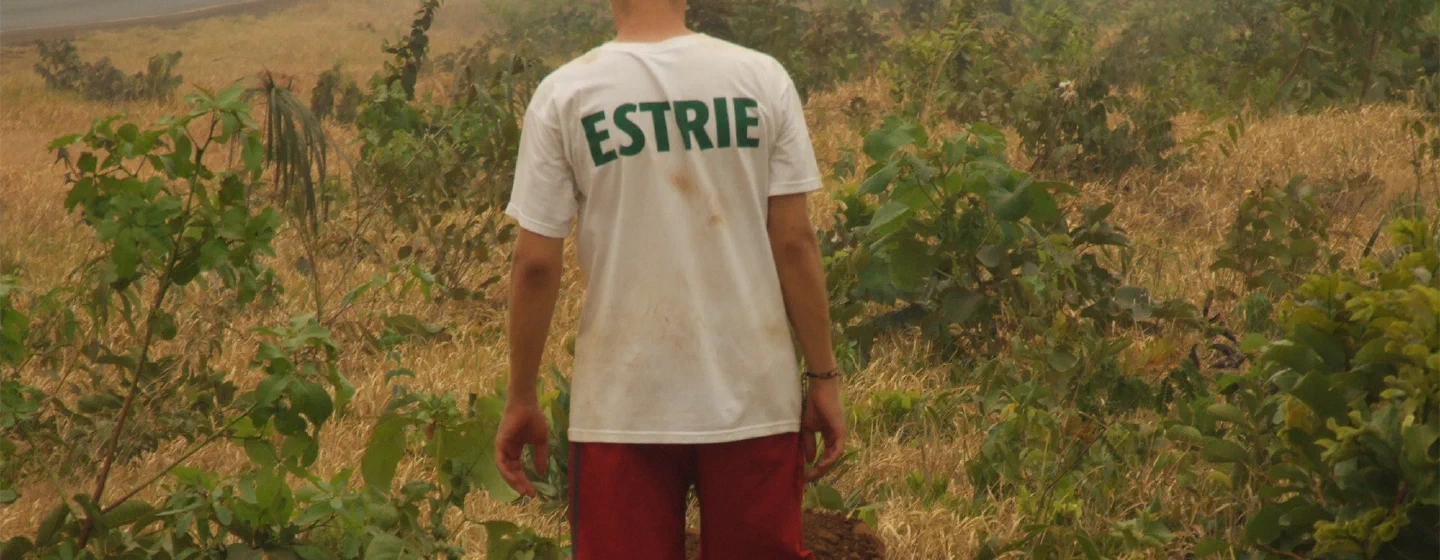
The cerrado near Chapada dos Guimarães taught me that. A t-shirt that said Estrie, standing in a landscape that had never heard of it.
What would you see differently about your organization if you could look at it from the outside?
About the author
Louis-Philippe Bellerose
Founder and Principal Consultant