Thales Digital Solutions
Energy Planning Interface for Hybrid Aircraft
Context
The shift toward hybrid aircraft introduces new operational complexity for the people who manage flight operations on the ground. Flight dispatchers, the professionals responsible for planning routes, fuel loads, and operational parameters for commercial flights, need tools that translate technical energy management into workflows they can actually use.
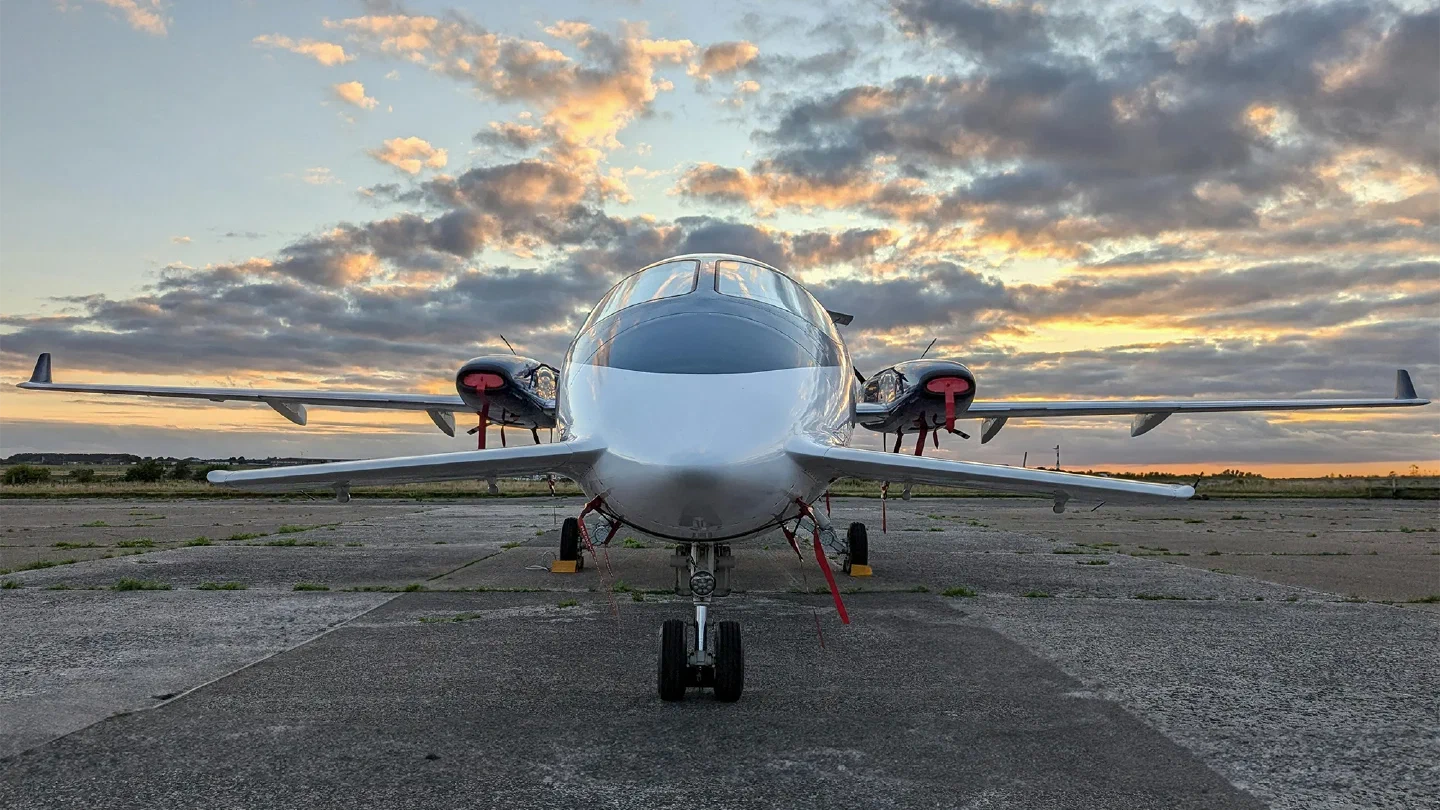
This project was part of a larger multi-partner research initiative led by Thales AVS FLX France, in collaboration with Voltaéro, a French company developing hybrid-electric aircraft for regional air mobility. The work package focused on designing the energy planning interface that flight dispatchers would use to manage hybrid aircraft operations.
The Challenge
I joined the project mid-implementation, taking over design responsibilities from Noémie Lemaire during her maternity leave. The initial design had already been approved by Thales AVS FLX France stakeholders. My mandate was to ensure continuity, oversee development, conduct user testing, and make design decisions for optimization, coherence, and quality assurance.
Taking over a design project mid-stream without having been part of the original research and concept phases presents specific challenges. Decisions have already been made. Relationships have already been established. The risk is both disruption (changing things that don’t need changing) and blind spots (inheriting assumptions that haven’t been tested).
The user testing phase was particularly important in this context. Flight dispatchers had been consulted early in the project, but Voltaéro, as the aircraft manufacturer, had not had direct access to the interface mockups during development. Getting feedback from both perspectives before the interface was finalized was essential.
The Approach
Development oversight
Working closely with the development team, I ensured that implementation remained aligned with the approved design specifications and functional requirements. Where gaps or ambiguities arose, I made design decisions that maintained coherence with the established direction while addressing emerging technical constraints.
User testing
The testing phase involved two distinct groups. Flight dispatchers (the primary users of the interface) were consulted to validate that the interface supported their actual workflows. Participants included dispatchers with experience in regional aviation contexts, aligned with the regional air mobility use case the product was designed for.
Voltaéro representatives were also shown the interface mockups to gather their perspective as the aircraft manufacturer. While not direct end users themselves, their feedback provided valuable context about how the interface aligned with the operational realities of their aircraft.
Design decisions
Throughout the development and testing phases, I made iterative design decisions focused on interface coherence, usability, and quality, ensuring that the energy planning tool remained both technically accurate and genuinely usable for the dispatchers who would rely on it in daily operations.
What the Work Produced
The user testing confirmed the overall direction of the interface and informed refinements to the design. The project delivered a validated, high-fidelity clickable prototype that served as the specification for the full application build.
The interface successfully integrated into the operational workflow context it was designed for providing flight dispatchers with a tool suited to the specific demands of hybrid aircraft energy planning in a regional air mobility context.
Deliverables
- Development oversight and design continuity from mid-project handover
- User testing with flight dispatchers and Voltaéro representatives
- Iterative design decisions for interface coherence and quality assurance
- High-fidelity clickable prototype used as full application specification
Project period: September 2023 — December 2023
Client: Thales Digital Solutions
End client: Thales AVS FLX France / Voltaéro
Primary users: Flight dispatchers — regional air mobility context
Language of work: French and English